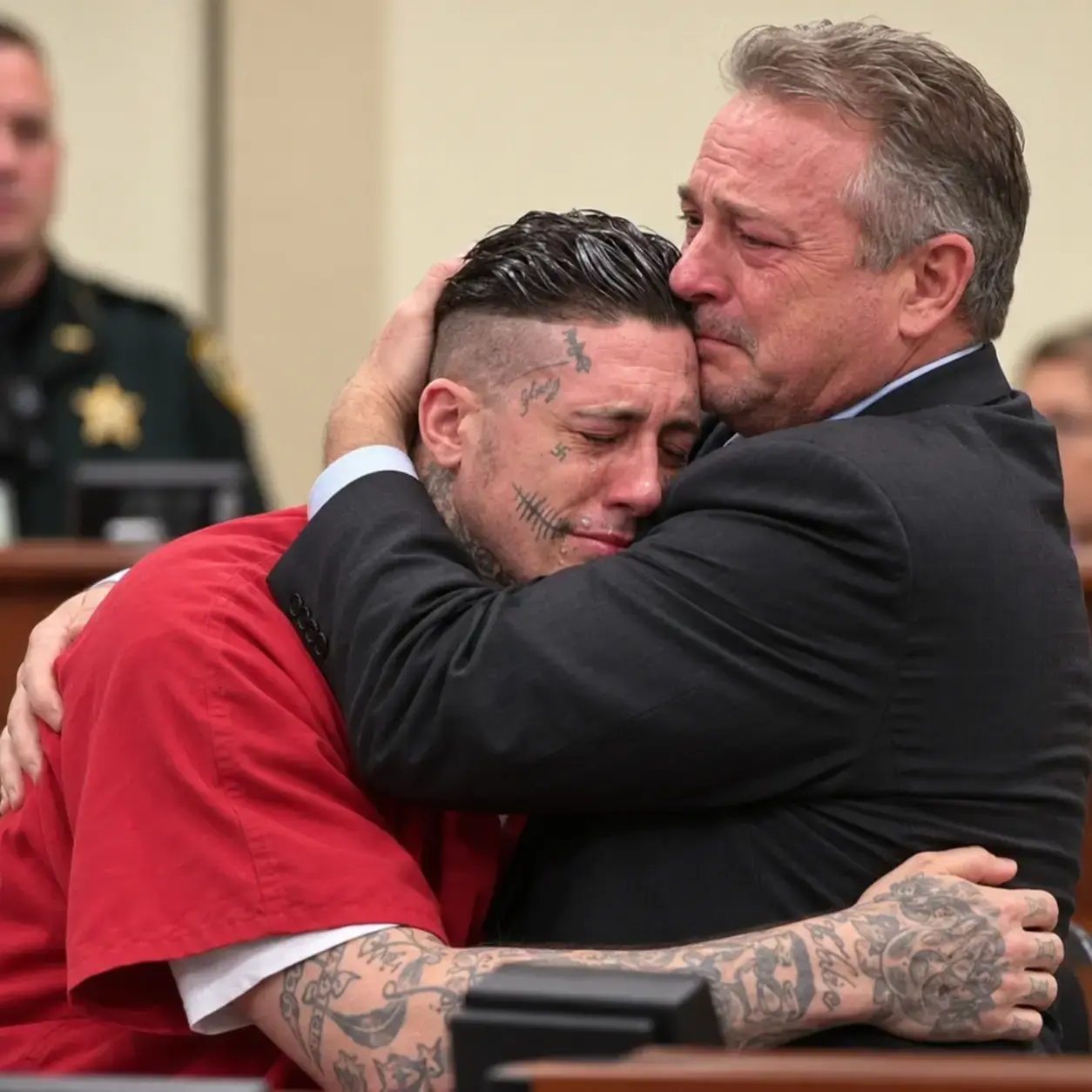
🚨 Wade Wilson Case in Florida: What Is Confirmed—and What the “40 Minutes Ago” Headline Leaves Unanswered
FLORIDA — An unfinished headline promises a dramatic revelation: “Wade Wilson was officially confirmed as…” But the most important part of that sentence is missing—and the available evidence does not justify filling the gap with a death announcement, an execution date, a medical emergency, or a surprise release.
What can be established is serious enough. Wade Steven Wilson was convicted in connection with the murders of Kristine Melton and Diane Ruiz, and his case subsequently entered Florida’s capital appeals system. Those documented events provide a factual foundation. They do not authenticate an unspecified announcement supposedly issued within the past hour.
For readers encountering the headline, the central question is straightforward: What, exactly, has been confirmed, by whom, and in which document?
Until those questions have clear answers, urgency should not be mistaken for accuracy.
The Convictions Behind the Headlines
The State Attorney’s Office for Florida’s 20th Judicial Circuit announced that a jury convicted Wilson of two counts of first-degree murder on June 12, 2024. Its subsequent statement reported that jurors recommended death sentences on June 25 following the penalty phase. The office identified the victims as Kristine Melton and Diane Ruiz.
Those dates matter because they distinguish established courtroom developments from a purported new event.
A conviction announced in 2024 does not become breaking news in 2026 simply because a social media caption adds “40 minutes ago.” Likewise, a photograph from an earlier hearing cannot establish that a new hearing has occurred.
The prosecution’s announcement also described convictions for additional offenses, including motor vehicle theft, battery, burglary, and petit theft. These were specific findings in a criminal proceeding—not the vague, unnamed development suggested by the unfinished headline.
What the Sentencing Record Establishes
An appellate filing in the official Florida court system states that Wilson received death sentences for both murders on August 27, 2024, and filed his notice of appeal the following month. The document provides a traceable account of those procedural milestones.
That information supports a carefully worded historical statement: Wilson was sentenced to death in 2024.
It does not, by itself, establish his precise status at every later moment. Nor does it prove that an execution has been scheduled, carried out, postponed, or canceled.
Those are separate claims requiring separate evidence.
This distinction can disappear when a complicated case is compressed into a few emotionally charged words. Yet the difference between a sentence and its implementation is fundamental to understanding what a headline actually means.
The Appeal Is Part of the Documented Story
Florida’s official appellate case system identifies the proceeding as Wade Steven Wilson v. State of Florida and classifies it as a mandatory death penalty review. The Florida Supreme Court’s February 2026 oral argument materials also list Wilson’s case.
These records demonstrate that appellate proceedings form part of the case’s documented history.
They should not be stretched into a prediction about the outcome. A case listing does not mean a defendant has won an appeal. A scheduled argument does not establish that a sentence has been reversed. A motion filed by an attorney is also different from a ruling issued by a court.
For a new headline to describe an appellate result accurately, it should identify the decision, its date, and what the court actually ordered.
What Remains Unverified
The supplied wording never identifies what Wilson was supposedly “officially confirmed as.”
That omission leaves room for readers to imagine very different developments. Some might assume a death announcement. Others might interpret the phrase as referring to a prison transfer, a legal decision, or a health update.
None of those interpretations is established by the headline itself.
The sources reviewed for this article did not substantiate the claimed announcement within the stated forty-minute window. That is a limit on what this report can verify; it is not a claim that every possible official communication has been examined.
The responsible conclusion is therefore narrow: the specific breaking-news premise remains unsupported by the evidence available here.
Why the Timestamp Needs Evidence
“Forty minutes ago” sounds precise. Without an original publication time, however, it provides very little usable information.
Forty minutes before which post? In which time zone? Was the caption copied from another page? Does the linked report contain the same claim, or does it describe a much older event?
An accurate breaking-news report should allow readers to reconstruct that timeline.
A date, a named authority, and a direct reference to the underlying announcement would make the claim assessable. An emotional introduction followed by an unfinished sentence does not.
Readers should also distinguish the time a webpage was updated from the time the event occurred. A newly edited article may still concern an older conviction or sentencing hearing.
What Genuine Confirmation Would Look Like
The evidence needed depends on the claim.
A report about a court decision should identify the court and the relevant order. A report about a custody change should cite an appropriate corrections source. A medical claim requires reliable, attributable information rather than speculation prompted by an old photograph.
The key is that the evidence must match the assertion.
A sentencing document cannot authenticate a hospital rumor. A court calendar cannot confirm a death. A screenshot carrying the word “official” is not equivalent to an official statement.
Before publishing a dramatic conclusion, an editor should be able to point to the precise material supporting it—and explain any uncertainty that remains.
The Victims Must Remain Central
Behind every discussion of Wilson’s case are Kristine Melton and Diane Ruiz.
Their names should not disappear beneath a headline built entirely around the convicted defendant. The prosecution’s public statement identifies both women as the victims in the murder convictions, anchoring the case in the lives that were taken.
Responsible coverage can examine court proceedings without turning them into entertainment.
That means avoiding imagined final conversations, invented family reactions, fabricated prison scenes, or unsupported claims about what someone supposedly said behind closed doors.
Such additions may make a story more dramatic, but they also prevent readers from distinguishing the public record from an author’s invention. In a real criminal case, that distinction deserves particular care.
How to Read the Next Update
A useful update should answer a small set of concrete questions: What happened? When did it happen? Who confirmed it? Where can the confirmation be checked?
It should also explain whether the development changes anything substantive.
An administrative filing may matter to the lawyers without changing the sentence. A hearing may address arguments without resolving them. A new article may summarize the case without reporting a new event.
These distinctions help readers understand the significance of a development instead of merely reacting to its presentation.
They also make it possible to correct mistakes precisely when initial information changes.
What Can Be Said Now
The documented record supports reporting Wilson’s murder convictions, the death sentences imposed in August 2024, and the existence of subsequent appellate proceedings.
It does not support completing the supplied headline with an invented revelation.
For now, the unanswered question is not what shocking event should be added after the ellipsis. It is whether the person publishing that claim can provide a dated, attributable announcement that establishes an event at all.
Until that evidence is available, an accurate headline should describe the verified case history and clearly identify the limits of the reporting.