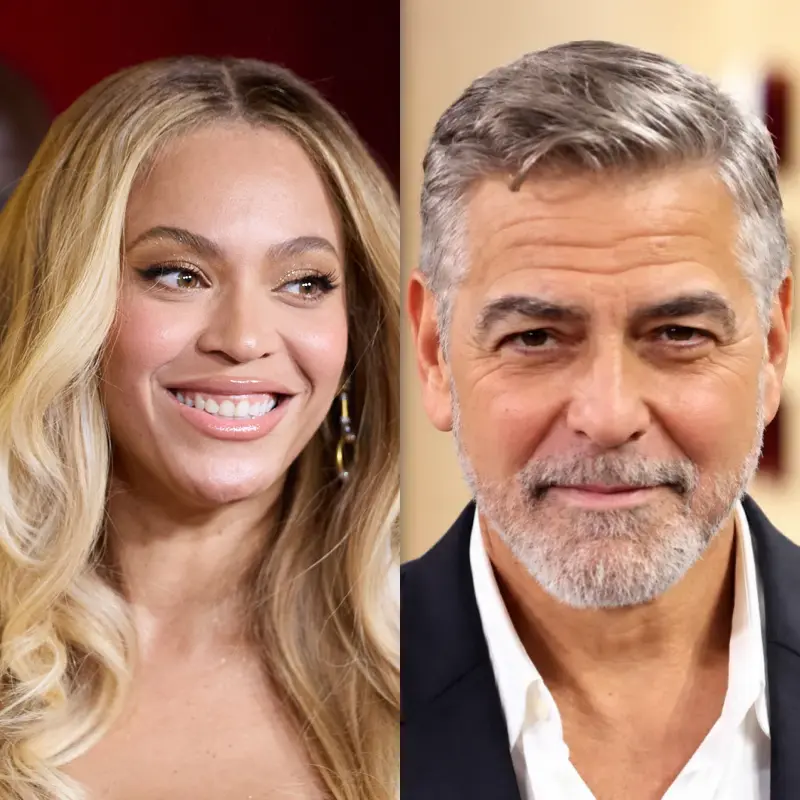
Hollywood has always been a place where fame, influence, and strong opinions collide. But in an imagined confrontation between two of entertainment’s biggest names, George Clooney and Beyoncé, a heated disagreement over patriotism, traditional values, and freedom of expression becomes something far more powerful than an ordinary celebrity argument.
What begins as a sharp criticism from Clooney quickly transforms into an unforgettable moment when Beyoncé refuses to remain silent.
And in this fictional scenario, her response delivers a message that reaches far beyond Hollywood.
A Confrontation Nobody Expected
The imagined controversy begins when George Clooney publicly challenges Beyoncé over her views on American culture, patriotism, and the responsibilities that come with celebrity influence.
Clooney, known for his political engagement and outspoken public positions, questions whether influential entertainers should use their platforms to shape conversations about the country's future.
But Beyoncé is not portrayed as someone willing to accept criticism without responding.
Instead of launching a personal attack, she chooses a different approach.
She speaks calmly, confidently, and directly.
“George Clooney says I’m dividing people with my opinions,” Beyoncé begins. “But what truly divides this country is mocking anyone who thinks differently and pretending only one side deserves to be heard.”
The fictional room falls silent.
What initially appears to be another celebrity disagreement suddenly becomes a conversation about something much larger: the meaning of respect in a divided society.
Beyoncé Delivers a Powerful Response
Rather than focusing entirely on Clooney, Beyoncé shifts attention toward the broader consequences of public criticism and political hostility.
“You know what’s even more dangerous?” she continues. “Using fame and influence to shame ordinary people simply because they refuse to follow Hollywood’s political script.”
In this imagined exchange, her words challenge the idea that celebrities should determine which opinions deserve public acceptance.
Her argument is simple: disagreement should never become an excuse for humiliation.
People from different backgrounds, political perspectives, and personal experiences should be able to express themselves without automatically becoming enemies.
For Beyoncé, as portrayed in this fictional narrative, freedom means more than having the right to speak.
It also means allowing others to speak, even when their opinions are uncomfortable or unpopular.
That distinction becomes the emotional center of the confrontation.
A Debate That Goes Beyond Hollywood
The fictional disagreement takes another dramatic turn when Beyoncé addresses the growing hostility surrounding political conversations.
“It’s not different opinions that weaken a nation,” she declares. “What weakens it is fear, intolerance, and teaching people to hate one another because of politics.”
The statement captures a central tension in modern American public life.
Celebrities often have enormous audiences, and their political opinions can attract attention far beyond traditional entertainment coverage.
Supporters may view their involvement as an important exercise of free expression, while critics may question whether fame gives entertainers disproportionate influence over public debate.
Both perspectives raise legitimate questions.
Should public figures speak openly about controversial issues?
Absolutely.
Should their views automatically carry more weight because they are famous?
Not necessarily.
And should disagreement between influential personalities become a reason for ordinary people to turn against one another?
That is the question this fictional confrontation asks audiences to consider.

George Clooney Faces an Unexpected Challenge
In the imagined scene, Clooney initially expects to control the direction of the conversation.
But Beyoncé's refusal to respond with personal insults changes the dynamic.
Rather than treating him as an enemy, she challenges the assumptions behind his criticism.
Her fictional response suggests that genuine leadership requires the ability to tolerate disagreement without demanding conformity.
The exchange does not establish that Clooney's views are wrong or that Beyoncé's position is beyond criticism.
Instead, it illustrates how public arguments can become more meaningful when participants address principles rather than personalities.
That is what makes the imagined encounter compelling.
Two enormously influential entertainers represent different approaches to public debate, yet the underlying question remains universal.
Can people disagree passionately while continuing to respect one another?
The Moment That Changes Everything
As the fictional confrontation approaches its conclusion, Beyoncé delivers what becomes the defining message of the scene.
“I’m not perfect,” she admits. “I’ve made mistakes. But I will always believe that a strong society is one where people can speak freely, disagree openly, and still respect each other.”
The imagined admission adds another dimension to her argument.
Instead of presenting herself as morally superior, she acknowledges that everyone makes mistakes.
Her point is that personal imperfection should not prevent people from defending principles they believe are important.
Then comes the fictional speech's most dramatic statement.
“A great society was not built on fear or hatred between citizens. It was built on courage, freedom, and the belief that people with different views could still move forward together. So ask yourselves — who is really trying to unite us?”
The question becomes the centerpiece of the story.
It asks audiences to examine not only what influential people say, but also how their words affect the communities listening.
The Bigger Message Behind the Imagined Showdown
Although this confrontation is fictional, the themes it explores reflect real challenges surrounding celebrity influence, political polarization, and public discourse.
George Clooney and Beyoncé are both internationally recognized entertainers whose public profiles extend beyond their artistic careers.
Their prominence makes them compelling characters in a hypothetical debate about the relationship between fame and social responsibility.
But the story's ultimate message does not depend on choosing one celebrity over the other.
It depends on recognizing that freedom of expression carries responsibilities for everyone.
Respect does not require agreement.
Confidence does not require cruelty.
And standing firmly behind personal convictions does not mean dismissing the humanity of people who think differently.
In this imagined Hollywood showdown, Beyoncé's most powerful response is not a personal insult or an attempt to embarrass George Clooney.
It is a reminder that a divided society cannot move forward if every disagreement becomes a battle between enemies.
The fictional confrontation ends with one unforgettable question: In a world where everyone wants to win the argument, who is actually willing to bring people together?