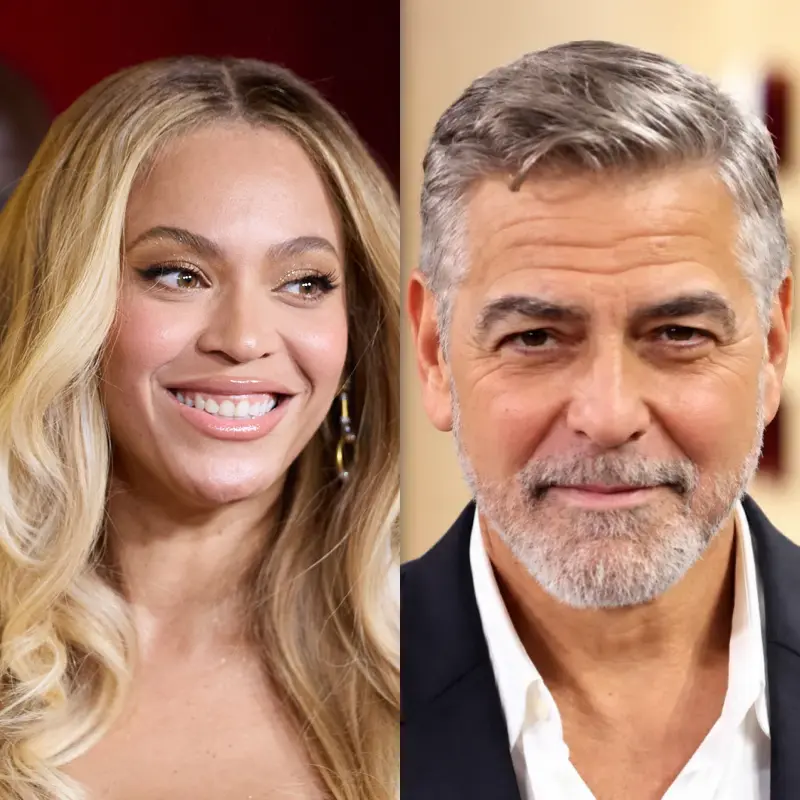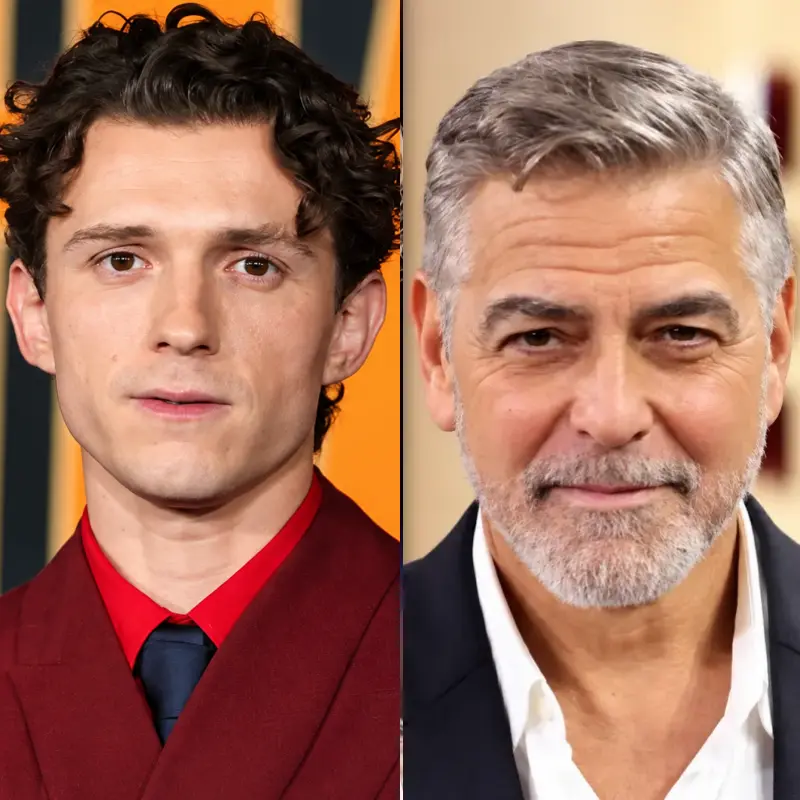
Hollywood has witnessed countless disagreements between famous personalities, but few imagined confrontations carry the emotional weight of a clash between two generations of international movie stars.
In this fictional scenario, legendary actor George Clooney challenges British superstar Tom Holland over patriotism, traditional values, freedom of expression, and the changing direction of American culture.
What initially appears to be a straightforward confrontation quickly develops into something far more dramatic.
Clooney expects to dominate the discussion with his experience, confidence, and reputation as an outspoken public figure. But Holland refuses to be intimidated.
Instead, the younger actor delivers a passionate response about freedom, personal responsibility, and the importance of respecting people who hold different opinions.
And by the end of this imagined exchange, one question remains: Who truly understands what it means to bring people together?
A Hollywood Confrontation Nobody Expected
The fictional controversy begins when George Clooney publicly questions Tom Holland's views on patriotism, traditional values, and the role celebrities should play in shaping public opinion.
Clooney, an Academy Award-winning actor known for his political engagement, is portrayed as challenging whether younger entertainers fully understand the responsibility that comes with enormous public influence.
But Holland, internationally recognized for portraying Spider-Man, refuses to accept the suggestion that age or experience determines whose opinions deserve respect.
Rather than responding angrily, he chooses his words carefully.
“George Clooney says I’m dividing people with my opinions,” Holland begins in a calm but firm voice. “But what truly divides this country is mocking anyone who thinks differently and pretending only one side deserves to be heard.”
The fictional atmosphere immediately changes.
What started as a disagreement between two Hollywood celebrities becomes a much broader discussion about freedom, tolerance, and the dangers of political hostility.
Tom Holland Refuses to Back Down
As the imagined debate continues, Holland delivers another powerful statement.
“You know what’s even more dangerous?” he asks. “Using fame and influence to shame ordinary people simply because they refuse to follow Hollywood’s political script.”
His fictional remarks challenge the idea that public figures should dictate which opinions are acceptable.
For Holland, as portrayed in this storyline, genuine respect means recognizing that ordinary citizens have the right to think independently.
People should not be dismissed simply because their political beliefs differ from those of influential entertainers.
The argument carries particular significance in an industry where celebrities regularly use interviews, award ceremonies, and social media to discuss controversial subjects.
Some audiences admire stars who speak openly about political issues. Others believe entertainment personalities should avoid using their fame to influence public debate.
In the fictional confrontation, Holland argues that neither perspective should become an excuse for intolerance.
Freedom of expression, he suggests, means protecting disagreement rather than demanding universal approval.

George Clooney Faces an Unexpected Challenge
In this imagined scenario, Clooney initially appears confident that his experience will give him the advantage.
After decades in Hollywood, he has built a reputation not only as an actor and filmmaker but also as a prominent voice in public discussions.
Yet Holland's response introduces an unexpected challenge.
Instead of attacking Clooney's career or personal character, he focuses on the broader principles behind their disagreement.
“It’s not different opinions that weaken a nation,” Holland declares. “What weakens it is fear, intolerance, and teaching people to hate one another because of politics.”
The statement becomes the emotional turning point of the fictional debate.
Rather than portraying disagreement as something dangerous, Holland presents it as an unavoidable part of a free society.
The real danger, his imagined argument suggests, emerges when people stop listening to one another.
It is a message that extends beyond entertainment and into everyday conversations between friends, families, and communities.
A Powerful Message About Unity
As the fictional confrontation reaches its most intense moment, Holland takes a more personal approach.
“I’m not perfect,” he admits. “I’ve made mistakes. But I will always believe that a strong society is one where people can speak freely, disagree openly, and still respect each other.”
The imagined admission reveals a different kind of confidence.
Holland does not claim to possess every answer.
Instead, he acknowledges that everyone makes mistakes, regardless of age, wealth, influence, or public reputation.
His message suggests that leadership is not about proving oneself superior to others.
It is about recognizing shared humanity even during difficult disagreements.
For a younger actor facing an established Hollywood figure, the fictional speech becomes a defining moment.
Rather than competing over celebrity status, Holland redirects the discussion toward the values that allow people with conflicting beliefs to coexist.
The Final Statement That Changes Everything
Then comes the dramatic conclusion.
In the imagined scene, Holland looks directly toward Clooney before delivering his final message.
“A great society was not built on fear or hatred between citizens. It was built on courage, freedom, and the belief that people with different views could still move forward together. So ask yourselves — who is really trying to unite us?”
The question hangs over the fictional confrontation.
It challenges the audience to consider whether winning an argument matters more than preserving mutual respect.
The scene does not require Clooney to abandon his beliefs or Holland to surrender his own.
Instead, it raises a more difficult possibility: two people can disagree strongly while still recognizing each other's dignity.
That idea becomes the heart of the story.
A Lesson Bigger Than Hollywood
Although the exchange is entirely fictional, its central themes reflect genuine challenges facing modern public discourse.
Celebrity influence, political polarization, and disagreements over national identity frequently generate intense public reactions.
The imagined confrontation between George Clooney and Tom Holland offers a dramatic way to explore those tensions.
It also illustrates the difference between defending an opinion and attacking the people who disagree with it.
Neither fame nor popularity automatically makes someone's argument correct.
And respect does not require silence.
The most meaningful conversations often happen when individuals remain willing to listen despite profound differences.
In this fictional Hollywood showdown, Holland's greatest victory is not embarrassing George Clooney or proving that one generation understands society better than another.
It is demonstrating that conviction and compassion can exist together.
Because in the end, the most powerful voice is not necessarily the loudest one. It may be the voice that reminds everyone that disagreement does not have to become hatred.
And that leaves one final question:
If two of Hollywood's biggest stars could disagree without becoming enemies, shouldn't the rest of society be capable of doing the same?