🚨 “IT WAS ALREADY IN HER BLOOD BEFORE THE FIRST INJECTION…” — A DISTURBING THEORY COULD CHANGE EVERYTHING ABOUT CHRISTA PIKE’S FAILED EXECUTION
A disturbing new theory is shifting attention to what may have happened before Christa Pike ever received the two reported doses of pentobarbital.
Under the theory, a review of Pike’s pre-execution bloodwork supposedly reveals traces of an unidentified substance that could interfere with the expected effects of the execution drug.
If such a finding were ever authenticated, investigators would face an explosive question: How did that substance enter Pike’s bloodstream before the first syringe was administered?
Was there an innocent medical explanation? Could another medication account for the finding? Or did someone with access to Pike before the procedure introduce something that officials never anticipated?
For now, there is no verified evidence establishing deliberate interference. But the theory raises an even darker possibility:
What if the mystery behind Christa Pike surviving the two injections began before she ever entered the execution chamber?
👇 THE DISTURBING EXPLAINED IN THE COMMENTS.
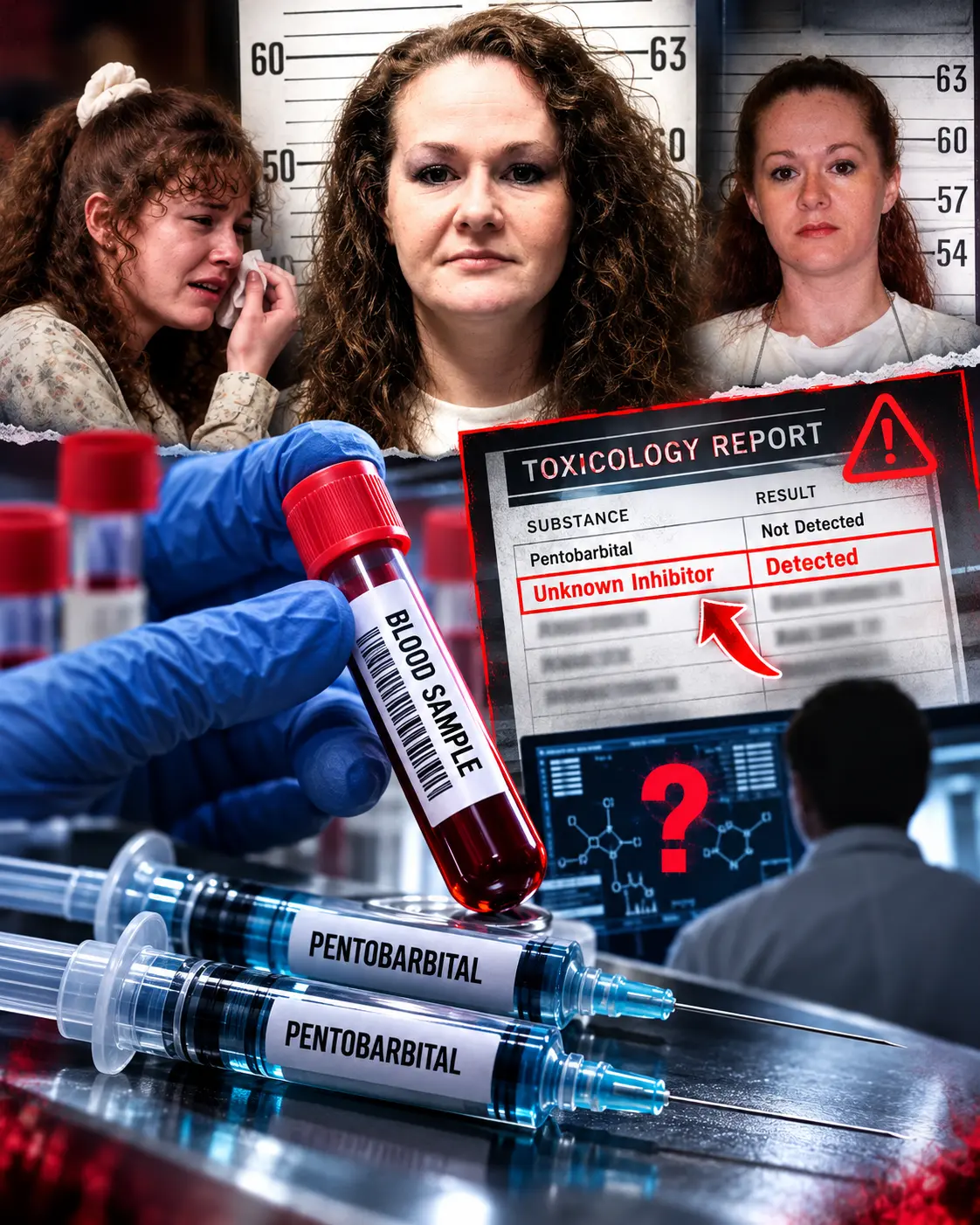
Until now, the most obvious place to search for an explanation would have been the execution chamber itself.
Two reported doses of pentobarbital. An unexpected outcome. Questions about the IV line, the preparation of the medication, the syringes and the people responsible for administering them.
But this theory would move the clock backward.
Instead of asking only what happened after the first syringe was connected, investigators would need to examine Pike’s condition during the hours—or potentially days—before the procedure.
The reason would be a hypothetical pre-execution blood sample.
If laboratory analysis genuinely showed that an unexpected substance was already circulating in Pike’s bloodstream before pentobarbital was administered, it could provide investigators with an entirely different avenue to examine.
The first task would be confirmation.
One laboratory result would not be enough to establish an extraordinary conclusion. Specialists would need to determine whether the unidentified substance was genuinely present, whether the test was reliable and whether contamination or analytical error could explain the result.
If another preserved sample existed, independent testing would become particularly important.
Only after confirming the finding could investigators begin asking what the substance actually was.
And that distinction matters.
The presence of another chemical in Pike’s bloodstream would not automatically mean it was capable of interfering with pentobarbital. Toxicologists would have to identify the substance, establish its concentration and determine whether there was a scientifically plausible interaction.
There are many reasons unexpected compounds can appear in toxicology testing.
Prescription medication would be an obvious possibility.
So would medications routinely administered by medical personnel. Metabolites—the compounds produced as the body processes drugs—could complicate interpretation as well.
Investigators would therefore need Pike’s complete medication history.
What had she been prescribed?
When had she last received each medication?
Who administered it?
At what dosage?
Was every administration documented?
Those questions could become just as important as anything that occurred inside the execution chamber.
If every substance detected in the sample corresponded with Pike’s documented medications, the mystery could have a relatively straightforward explanation.
But the theory becomes more consequential if investigators cannot identify a legitimate source.
Suppose independent testing repeatedly identifies the same compound.
Suppose medical records contain no indication that Pike should have received it.
And suppose toxicologists conclude that, at the concentration detected, it could plausibly alter the expected pharmacological effects of another drug.
At that point, investigators would have a genuine discrepancy to explain.
The timeline would become crucial.
A pre-execution blood sample could establish that the substance was present before the two syringes were administered. Investigators could then narrow their inquiry to the period preceding the execution.
Who had contact with Pike?
What medications, food and beverages did she receive?
Were routine medical examinations conducted?
Was an IV line established beforehand?
Did anyone enter her holding area who was not normally assigned there?
Each question would need documentary evidence.
Security footage could be compared with staff rosters. Electronic door-access logs could establish who entered restricted areas. Medication records could identify every authorized treatment. Witness interviews could help reconstruct Pike’s movements and interactions.
Yet even an unexplained substance would not establish deliberate interference.
That point would be essential.
Unexpected toxicology findings can result from numerous causes, and demonstrating that a substance was present is fundamentally different from demonstrating that someone intentionally administered it.
Investigators would first have to exclude innocent explanations.
Was the compound associated with something Pike had consumed?
Could it have resulted from an earlier medication?
Could hospital or laboratory contamination account for it?
Was the sample mislabeled?
Could the analytical instrument have mistaken one chemical for another?
Only after those possibilities were systematically examined would investigators have grounds to consider more troubling scenarios.
Then another piece of evidence could become critical: Pike’s earlier bloodwork.
If samples from different times had been preserved, toxicologists could compare them.
Imagine that a sample collected several days earlier did not contain the unidentified compound, while a sample collected shortly before the execution did.
That would potentially establish a narrower window during which the substance entered her body.
Investigators could then reconstruct that specific period almost minute by minute.
But there is another possibility.
Suppose earlier samples also contained the substance.
That could point away from interference connected specifically to the execution and toward a medication, metabolic process or longer-term exposure.
The science would therefore determine where the investigation went next.
Another major question would concern concentration.
Finding trace amounts of a substance is not necessarily medically significant. Modern laboratory equipment can detect extraordinarily small quantities of chemicals.
For the theory to have pharmacological significance, experts would need to establish that the concentration was sufficient to produce a meaningful effect.
That is where toxicologists and pharmacologists would become essential.
They could examine whether the unidentified compound could theoretically change the absorption, distribution, metabolism or effects of pentobarbital.
If experts concluded that it could not, the discovery might ultimately have little relevance to the execution outcome.
But if they concluded that it potentially could, investigators would have another comparison to make.
They would examine Pike’s observed physiological response against what might be expected from that interaction.
Did her response fit the proposed mechanism?
Did blood concentrations support it?
Did the timing make sense?
Scientific consistency would matter more than speculation.
Then there would be the question of access.
If investigators ultimately determined that Pike received an undocumented substance shortly before the execution, identifying who could have administered it would become a priority.
But that inquiry would have to proceed carefully.
Having access to Pike would not mean someone gave her anything. Being present near her cell would not establish misconduct. Even administering a medication would not be suspicious if that medication had a legitimate medical purpose.
Evidence would need to connect a specific action to the unexplained substance.
Without that connection, accusations of deliberate interference would remain unsupported.
That is what makes the hypothetical blood finding potentially so important.
It could change the starting point of the investigation without providing the ending.
Previously, investigators might focus on two syringes and ask whether something went wrong during their preparation or administration.
Now they would have to consider whether the conditions affecting the procedure were already present before those syringes ever entered the room.
The blood sample would effectively become a timestamp written in chemistry.
If properly collected, preserved and independently verified, it could tell investigators something about Pike’s physiological condition at a particular moment.
But it could not tell them why a substance was present.
That answer would require records, witnesses, forensic evidence and careful scientific analysis.
Until those pieces existed, claims of an outside force deliberately interfering with the execution would remain speculation rather than established fact.
Still, if an authenticated pre-execution sample ever revealed an undocumented substance capable of materially altering the expected effects of pentobarbital, the investigation would face an unavoidable change in direction.
The most important question would no longer be limited to:
What happened when Christa Pike received those two injections?
It would become something much broader:
What happened to Christa Pike before the first injection was ever administered—and who had access to her during that critical period?