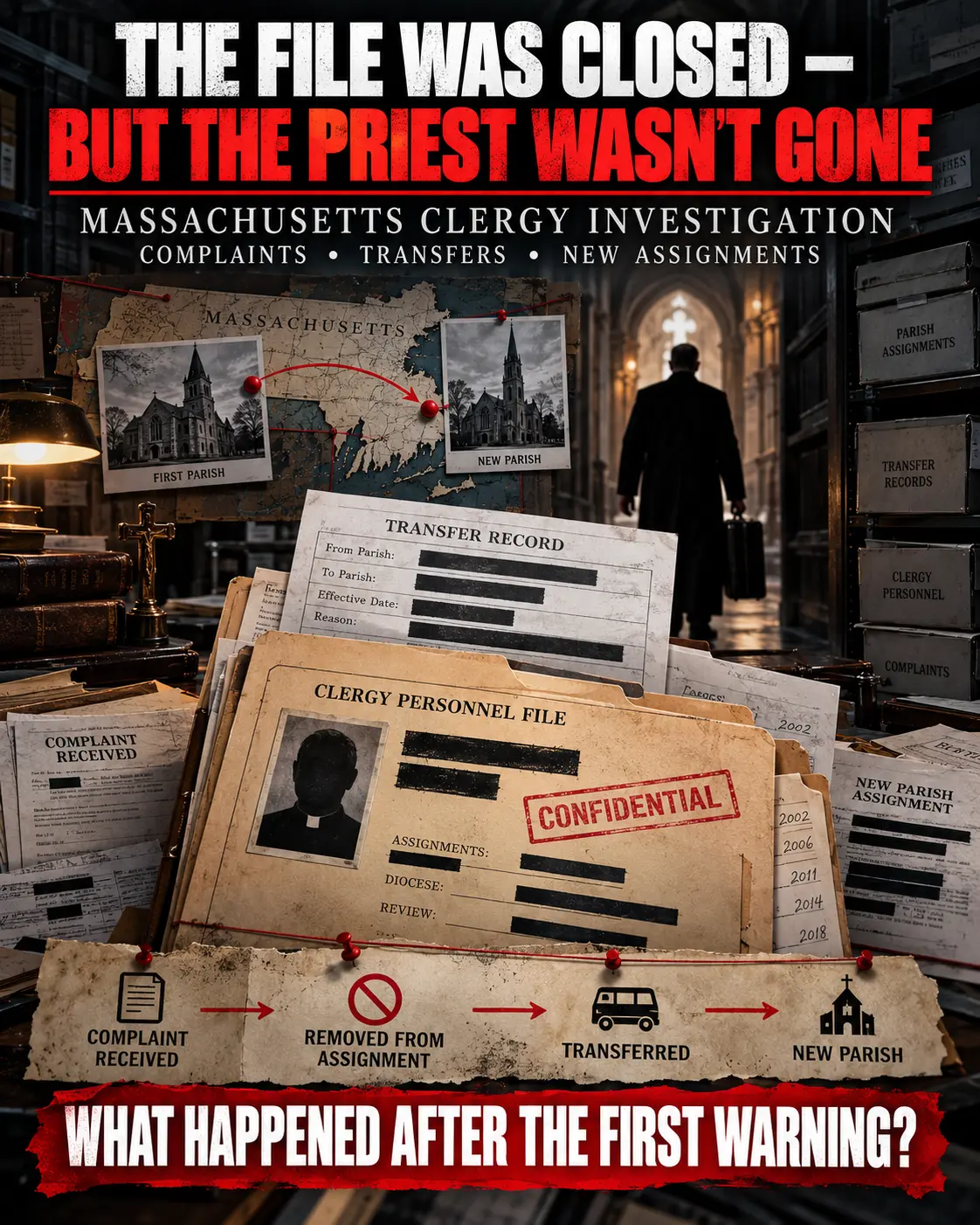
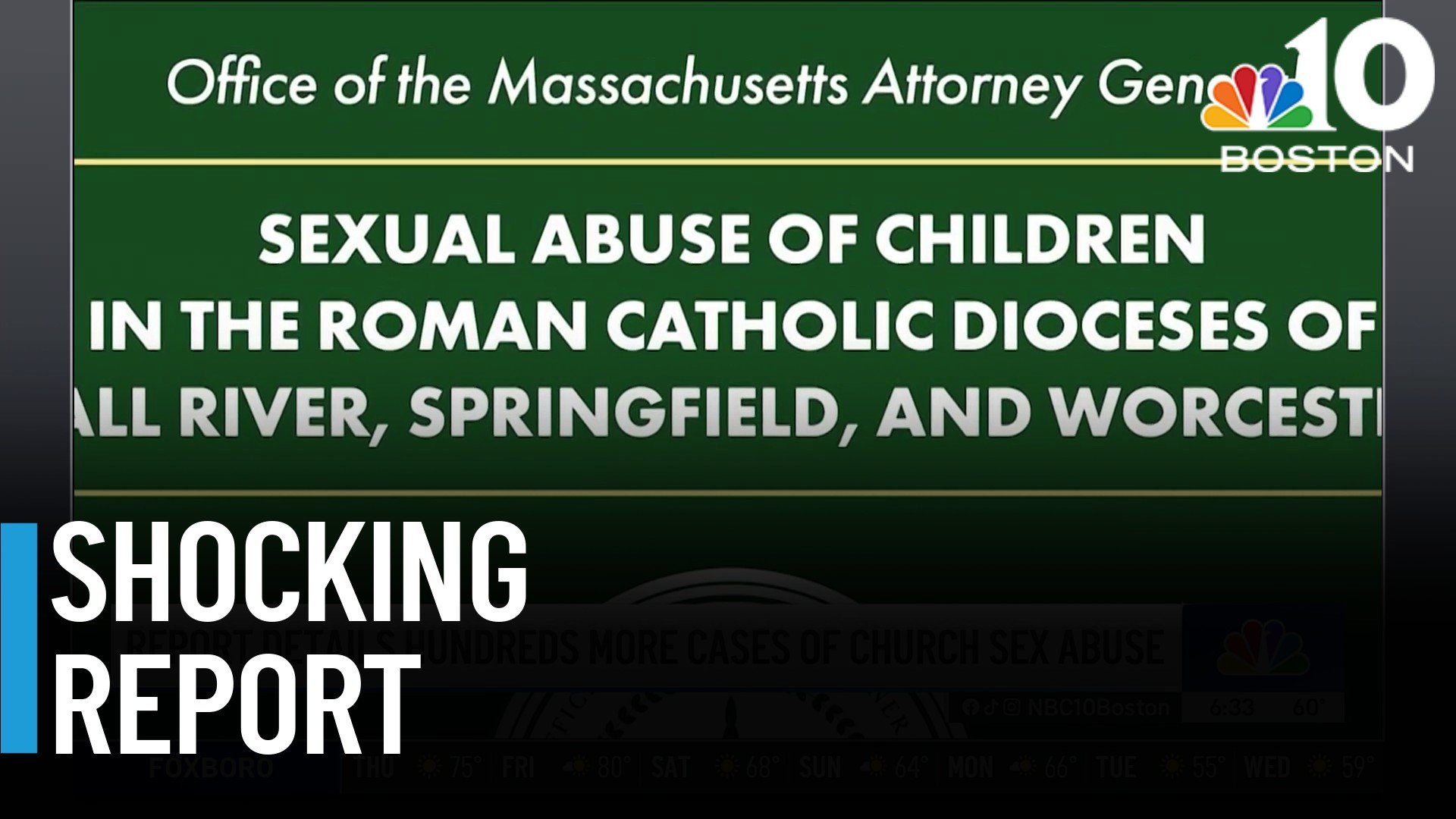
🚨 “THE DATE ON THIS DOCUMENT CAME BEFORE EVERYTHING ELSE…” — MASSACHUSETTS CLERGY RECORDS RAISE A CRITICAL QUESTION ABOUT WHEN CHURCH OFFICIALS FIRST KNEW
Deep inside the records examined during Massachusetts’ sweeping investigation into clergy se.xual abuse is a question that could be answered by something remarkably simple: a date on an old document.
Investigators reviewed decades of complaints, personnel records, internal correspondence and decisions involving accused clergy across the Fall River, Springfield and Worcester dioceses.
Now the most important timeline may not begin when a priest was removed, transferred or publicly identified.
It may begin when Church officials first received information that something was wrong.
An earlier complaint, memorandum, letter or personnel entry could establish that concerns had reached diocesan leadership before later decisions about a priest’s ministry were made.
That makes one question crucial:
What is the earliest documented warning — and what did Church officials do after receiving it?
👇 THE DOCUMENTS, THE DATES — AND THE TIMELINE INVESTIGATORS RECONSTRUCTED — IN THE FIRST COMMENT.
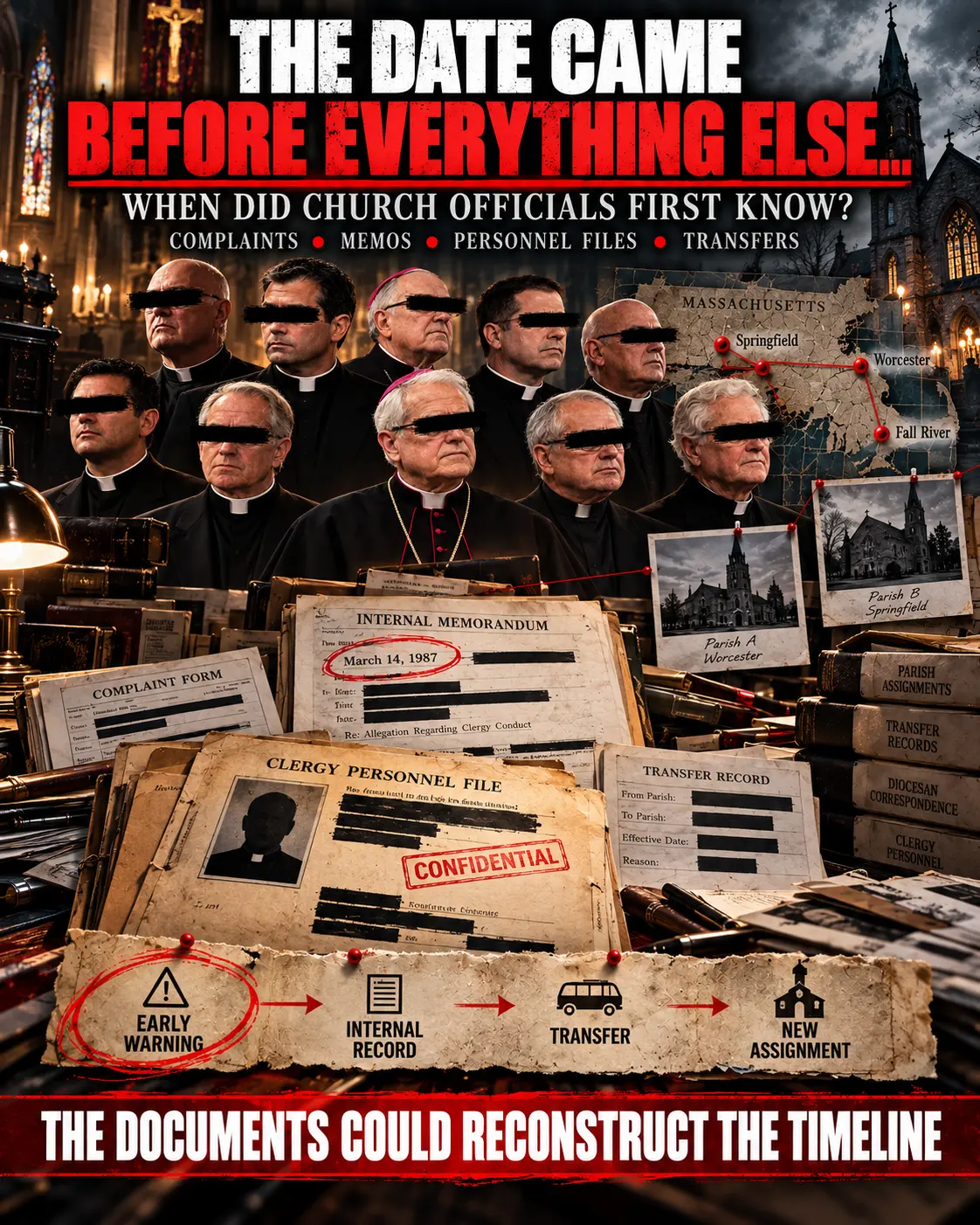
When Massachusetts investigators began examining the history of clergy se.xual abuse in the dioceses of Fall River, Springfield and Worcester, they were confronting events that stretched across generations.
Memories could fade. Witnesses could die. Personnel could change. Policies could be rewritten.
Documents, however, could preserve something crucial: when information entered the institution.
The Massachusetts Attorney General’s investigation, launched in 2019 and released publicly in September 2026, involved an enormous documentary review. According to the Attorney General’s Office, investigators examined more than 300,000 pages of records and interviewed more than 100 people, including survivors, advocates, attorneys, clergy, diocesan employees and experts. (mass.gov)
Those records helped investigators reconstruct decades of institutional decision-making.
The investigation found evidence that more than 270 Catholic clerics abused nearly 1,000 children across the three dioceses over approximately a century. But the Attorney General’s inquiry went beyond identifying alleged or established perpetrators.
Investigators wanted to know what happened inside the institution after information about possible abuse surfaced.
That is where dates become extraordinarily important.
Consider the difference between two dates in a hypothetical timeline: the date a priest was formally removed from ministry and the date diocesan officials first received a complaint about him.
Those events might be separated by days.
They might be separated by months.
Or they might be separated by years.
Determining that gap can fundamentally change how investigators understand an institution’s response.
The Massachusetts report documents historical failures by diocesan leaders to adequately respond to allegations and warning signs. Among the practices identified by the Attorney General were transferring accused and offending priests to other parishes without disclosing the reasons, returning priests to ministry after treatment without adequate supervision, failing to meaningfully enforce restrictions and concealing why certain priests were removed from ministry. (mass.gov)
The report also found failures to consistently report allegations to law enforcement.
These findings make the earliest documented warning especially significant.
A transfer record by itself tells investigators that someone moved.
A personnel entry tells them where a priest served.
A treatment record may establish that concerns were serious enough for intervention.
A letter or complaint can potentially establish something different: that specific information had reached particular people by a particular date.
When those records are placed side by side, a chronology begins to emerge.
Complaint received.
Then what?
Was the allegation investigated?
Was law enforcement notified?
Was the priest temporarily removed?
Were restrictions imposed?
Did Church officials communicate the concern to the next parish?
Or did the priest continue serving?
Those are precisely the kinds of institutional-response questions at the center of the Massachusetts investigation.
Importantly, the report does not mean that every accusation against every clergy member followed an identical sequence, nor does an allegation by itself establish criminal guilt. Individual cases vary substantially in evidence, circumstances and outcome.
But across the historical record, investigators concluded that institutional failures sometimes allowed abuse to continue for years. (mass.gov)
That finding makes chronology essential.
Suppose a public account suggested Church leadership became aware of a problem in one year, while an internal document demonstrated that officials had received relevant information earlier.
The earlier document would not automatically prove a cover-up or establish criminal responsibility.
But it could alter the factual timeline.
Investigators would then have to examine what happened during the period between the earlier warning and the later action.
That is why old administrative records can carry extraordinary significance.
A document does not need dramatic language.
It does not need to contain a confession.
It does not need to say “urgent” or “secret.”
Sometimes the most consequential information on the page is simply the date at the top.
The Massachusetts report demonstrates how apparently mundane institutional paperwork can become crucial decades later.
Personnel files can show assignments.
Correspondence can show communication between officials.
Complaints can establish when concerns were raised.
Transfer records can reveal subsequent placements.
Documents concerning treatment or restrictions can show what measures officials considered necessary.
Together, those records can allow investigators to reconstruct a sequence that no single document could establish on its own.
The investigation also examined whether allegations were properly communicated outside Church structures.
According to the Attorney General, diocesan leaders historically did not consistently report allegations to law enforcement. That finding makes the difference between an internal record date and an external report date particularly important. (mass.gov)
If an institution possessed information before authorities received it, investigators naturally need to understand what occurred during that interval.
Who possessed the information?

How specific was it?
What policies existed at the time?
What actions were taken?
And what opportunities, if any, remained for the accused clergy member to interact with children?
These questions cannot be answered responsibly through speculation. They require documentary evidence and case-by-case analysis.
That is precisely why the Attorney General’s massive archive matters.
The investigation also confronts a difficult problem created by the passage of time.
Many of the events occurred decades ago. Some clergy members and institutional officials are deceased. Applicable statutes of limitations have expired in many cases. Other conduct predates stronger Massachusetts child-protection criminal laws enacted in 2002, which generally cannot be applied retroactively. (mass.gov)
As a result, reconstructing a historical timeline does not necessarily produce a prosecutable criminal case.
But it can produce something else: a clearer public record.
For survivors, that record can matter enormously.
It can establish that a warning existed.
It can establish when officials received information.
It can reveal what decisions followed.
And it can help answer a question survivors may have carried for decades: Could someone have acted sooner?
The Attorney General’s recommendations indicate that Massachusetts officials see these historical lessons as relevant to current child-protection practices.
The report calls for stronger investigation and reporting procedures, meaningful enforcement of restrictions on accused and offending clergy, greater transparency and stronger accountability mechanisms. It also recommends changes to state law intended to expand survivors’ ability to pursue civil claims. (mass.gov)
The Catholic dioceses have implemented substantial reforms since the clergy-abuse crisis erupted publicly in Massachusetts more than two decades ago, including child-protection programs, background checks, safe-environment training and procedures for handling allegations.
The Attorney General acknowledged those improvements while also finding that policies were not always consistently followed.
And that brings the investigation back to the documents.
Hundreds of thousands of pages may sound overwhelming.
But major historical questions can sometimes turn on a handful of entries.
A complaint.
A memorandum.
A personnel notation.
A transfer authorization.
A letter.
And one date that appears earlier than expected.
That date alone does not tell the entire story.
But it tells investigators where to start looking.
Because when reconstructing decades of institutional decisions, the critical moment may not be when the public learned what happened.
It may not even be when a priest was finally removed.
The critical moment may have occurred much earlier — the first time a warning reached someone with the authority to act.
And once that date is established, another question immediately follows:
What happened next?