🚨 “THE FILE WAS CLOSED — BUT THE PRIEST WASN’T GONE…” — MASSACHUSETTS REPORT REVEALS ACCUSED CLERGY WERE MOVED, RETURNED TO MINISTRY OR PLACED IN NEW PARISHES
The newly released Massachusetts investigation is drawing attention to one of the most disturbing patterns buried inside decades of Catholic Church records: an allegation did not always mean a priest disappeared from ministry.
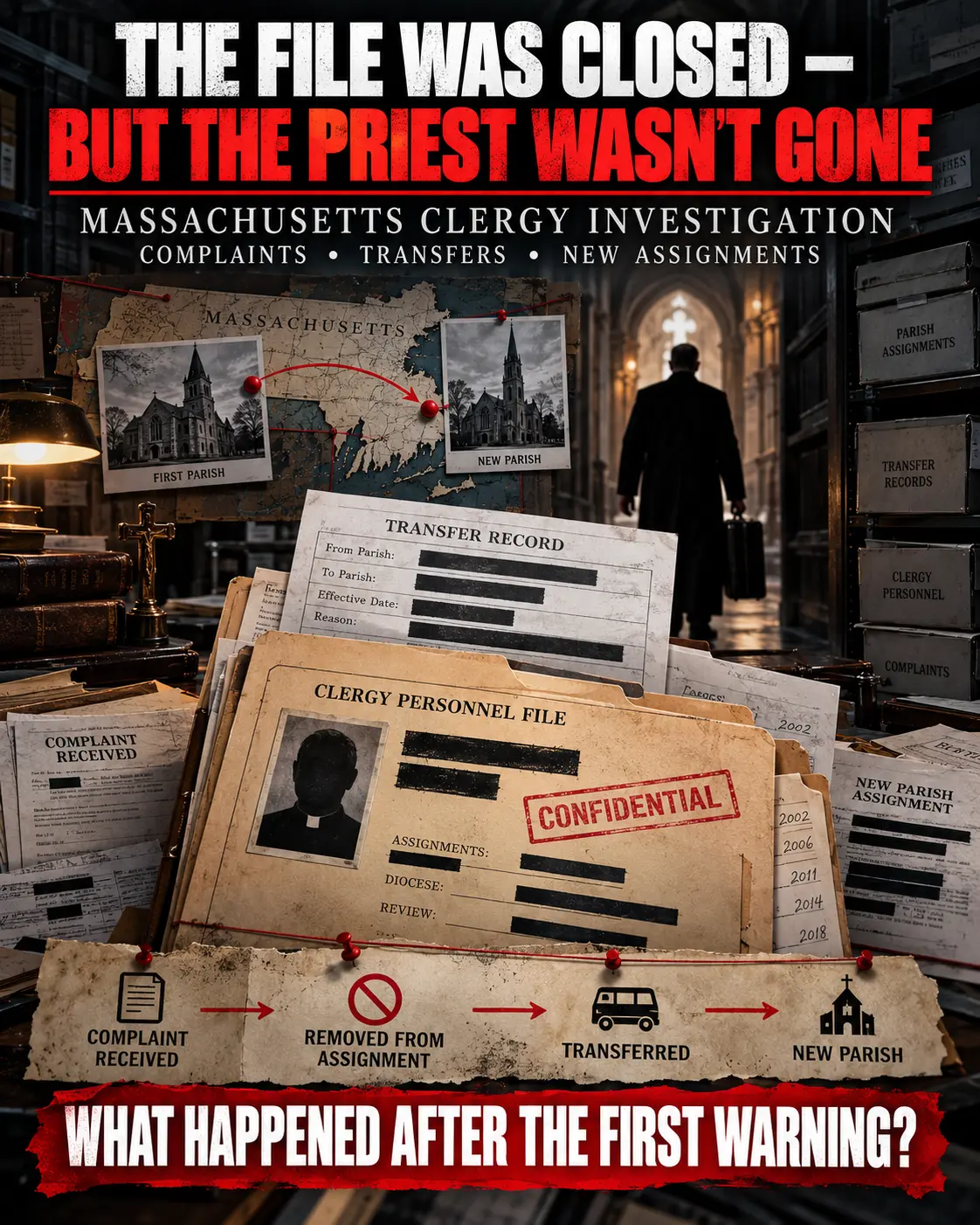
According to the Attorney General’s findings, diocesan leaders historically transferred accused and offending priests to other parishes without disclosing why they had been moved. In other cases, priests were reportedly returned to ministry after treatment without adequate supervision, while restrictions intended to limit their activities were not always meaningfully enforced.
That creates a troubling timeline investigators have now reconstructed from old personnel records:
An allegation was received. A decision was made behind closed doors. The priest left one assignment — but in some cases, his ministry did not end there.
The Massachusetts report says these historical institutional failures sometimes left additional children vulnerable, turning attention toward a critical question:
When Church officials knew there was a potential danger, why were some accused clergy still allowed to continue elsewhere?
👇 THE TRANSFERS, THE INTERNAL DECISIONS — AND WHAT HAPPENED AFTER THE FIRST WARNING — IN THE FIRST COMMENT.
The answer begins inside an extraordinary paper trail assembled over years by the Massachusetts Attorney General’s Office.
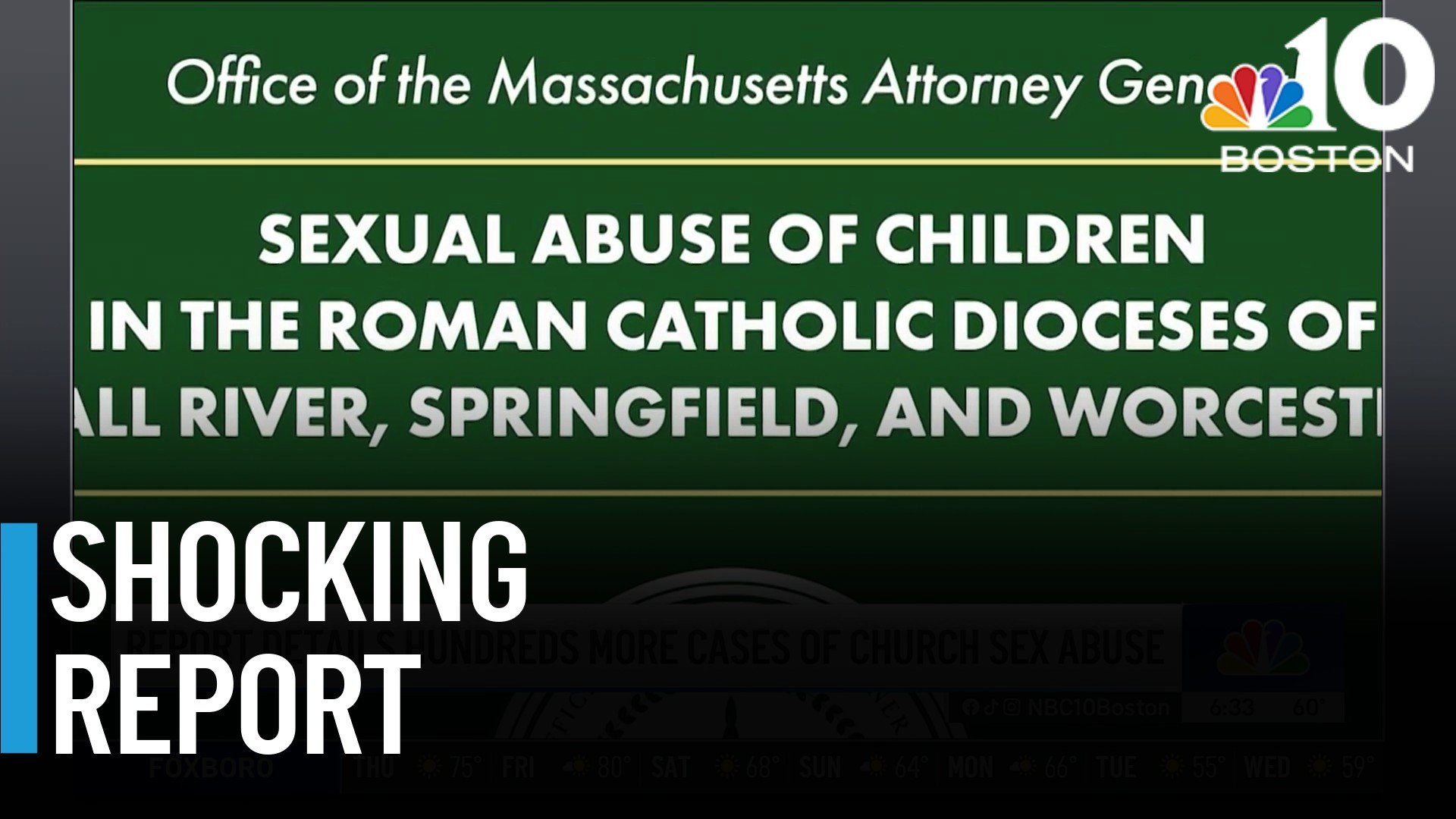
The investigation, launched in 2019, examined the Roman Catholic dioceses of Fall River, Springfield and Worcester. Investigators reviewed more than 300,000 pages of material and interviewed more than 100 people, including survivors, clergy, diocesan employees, attorneys, advocates and experts in child se.xual abuse and canon law. Their task was not limited to determining what individual clergy members had been accused of doing. They also examined what Church leadership did after an allegation reached the institution.
That distinction is at the heart of the report.
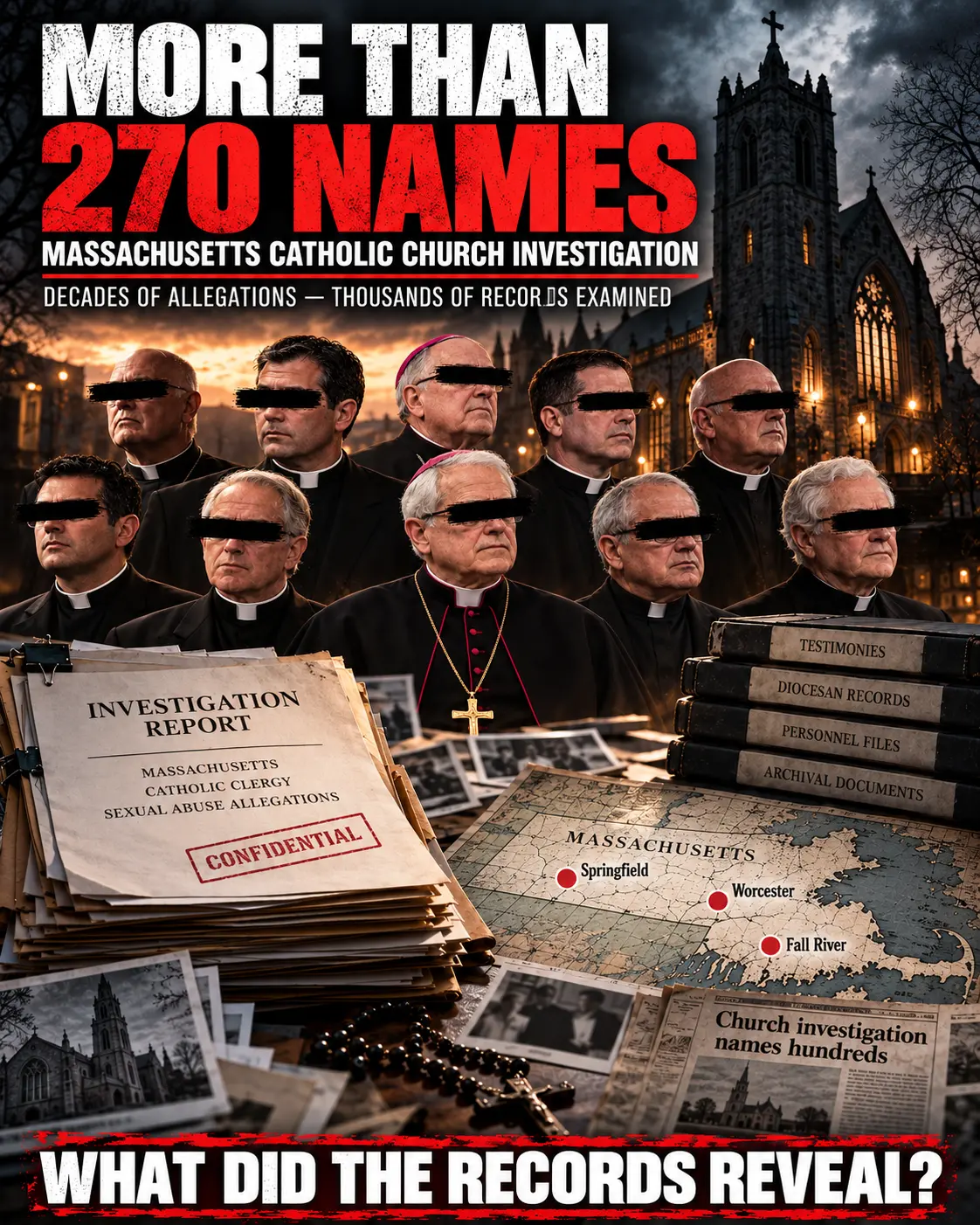
According to Attorney General Andrea Joy Campbell, the investigation found evidence that more than 270 Catholic clerics abused nearly 1,000 children over approximately a century across the three dioceses. It is the first comparable public accounting of the abuse and institutional response in Fall River, Springfield and Worcester following the earlier scrutiny of the Archdiocese of Boston.
But one of the report’s most consequential findings concerns what happened when warning signs emerged.
The Attorney General says diocesan leaders historically failed to adequately respond to allegations and warning signs. The investigation documented accused and offending priests being transferred to other parishes without disclosure of the reasons for those transfers.
That meant leaving one parish did not necessarily mean leaving ministry.
In some instances documented by investigators, priests went through treatment and were later returned to ministry without adequate supervision. Restrictions imposed on clergy were not always meaningfully enforced. The report also found instances in which the reasons priests were removed from ministry were concealed and allegations were not consistently reported to law enforcement.
Put together, those findings create a pattern far more complicated than a single complaint followed by a single decision.
Imagine the institutional timeline investigators had to reconstruct decades later: an allegation enters a diocesan system. Officials receive information. Internal discussions take place. A priest may leave an assignment, undergo treatment or face restrictions. But the story does not necessarily stop there.
The next entry in the record may involve another assignment.
And that is precisely why the old transfer records matter.
A transfer can look routine when viewed alone. But when placed beside a prior complaint or documented warning, the chronology can take on an entirely different significance.
The Massachusetts investigation examined those sequences across decades.
Its conclusion was stark: systemic failures sometimes allowed abuse to continue for years.
The report therefore shifts attention from a question that has dominated clergy-abuse scandals for decades — “Who was accused?” — toward another equally important question:
Who knew, when did they know, and what happened next?
The answer was not always the same.
The investigation spans an enormous period of history, and policies, personnel, reporting requirements and Massachusetts criminal law changed significantly over that time. It would therefore be inaccurate to treat every case as identical or every allegation as having the same evidentiary status.
But investigators say the broader historical pattern was clear enough to warrant serious conclusions about institutional conduct.
The Attorney General’s Office describes decades-long concealment of child se.xual abuse and identifies past and current policies, practices and lapses that it says have created risks for children.
The investigation also highlights why disclosure surrounding transfers matters.
When an accused priest moved from one parish to another without the reason being disclosed, people in the new community could have had little understanding of the circumstances behind that move. The report’s findings therefore raise questions not simply about personnel management, but about information: what was documented internally, what was communicated externally, and who was positioned to evaluate the risk?
Those questions become even more serious in cases involving a return to ministry after treatment.
Treatment itself did not necessarily resolve the responsibility of Church leadership to supervise, restrict or monitor a priest. According to the Attorney General, investigators found cases in which priests returned following treatment without adequate supervision.
The same problem appears in another form when restrictions existed on paper but were not meaningfully enforced.
A rule is only protective if someone makes sure it is followed.
That principle helps explain why the Attorney General’s recommendations extend beyond documenting what happened historically. The office is calling for stronger procedures surrounding investigations, reporting, restrictions and transparency. It specifically recommends adequately reporting and investigating allegations, enforcing restrictions on accused and offending priests, and providing complainants and communities with greater transparency about what officials knew and how they responded.
Yet there is another striking element to the investigation.
Despite finding illegal conduct, the multi-year investigation concluded without new indictments arising directly from it.
The Attorney General says this was largely because some conduct fell outside applicable statutes of limitations, while other conduct occurred before Massachusetts enacted stronger criminal child-protection laws in 2002. Criminal statutes generally cannot simply be applied retroactively to conduct that was not covered by them at the time.
That legal reality creates a difficult divide between historical accountability and criminal prosecution.
A record can document disturbing conduct.
An investigation can reconstruct what institutional leaders did.
A survivor's account can become part of the public historical record.
Yet decades later, prosecutors may still be legally prevented from bringing a criminal case.
For survivors, that distinction can be profound.
Campbell emphasized that behind the statistics are children whose safety was violated and survivors who have carried the consequences for years or decades. The report includes written survivor accounts in an appendix, preserving testimony alongside the institutional records examined by investigators.
And that brings the story back to those old files.
Personnel documents may appear bureaucratic: dates, assignments, correspondence, restrictions, treatment records and administrative decisions.
But placed chronologically, they can tell another story.
Complaint.
Internal response.
Removal or transfer.
Treatment or restrictions.
Return to ministry or reassignment.
That sequence is not a description of every priest or every allegation contained in the Massachusetts investigation. Each case has its own evidence and history.
But the Attorney General’s findings establish that variations of that pattern occurred — and that institutional failures sometimes permitted abuse to continue.
That may ultimately be one of the most significant revelations of the entire investigation.
Because the question is no longer only whether someone was removed from a particular parish.
It is what happened afterward.
Where did that person go?
What restrictions followed him?
Who knew about the previous allegations?
Were those restrictions enforced?
Was law enforcement informed?
And did the people in the next community know why the priest had suddenly arrived?
Decades later, Massachusetts investigators have begun putting those pieces back together.
The result is not simply a list of names.
It is a timeline of decisions — decisions made after warnings had already appeared, decisions that determined whether an accused priest remained in ministry, and decisions whose consequences, according to the Attorney General’s findings, could extend far beyond the parish where the first complaint was made.